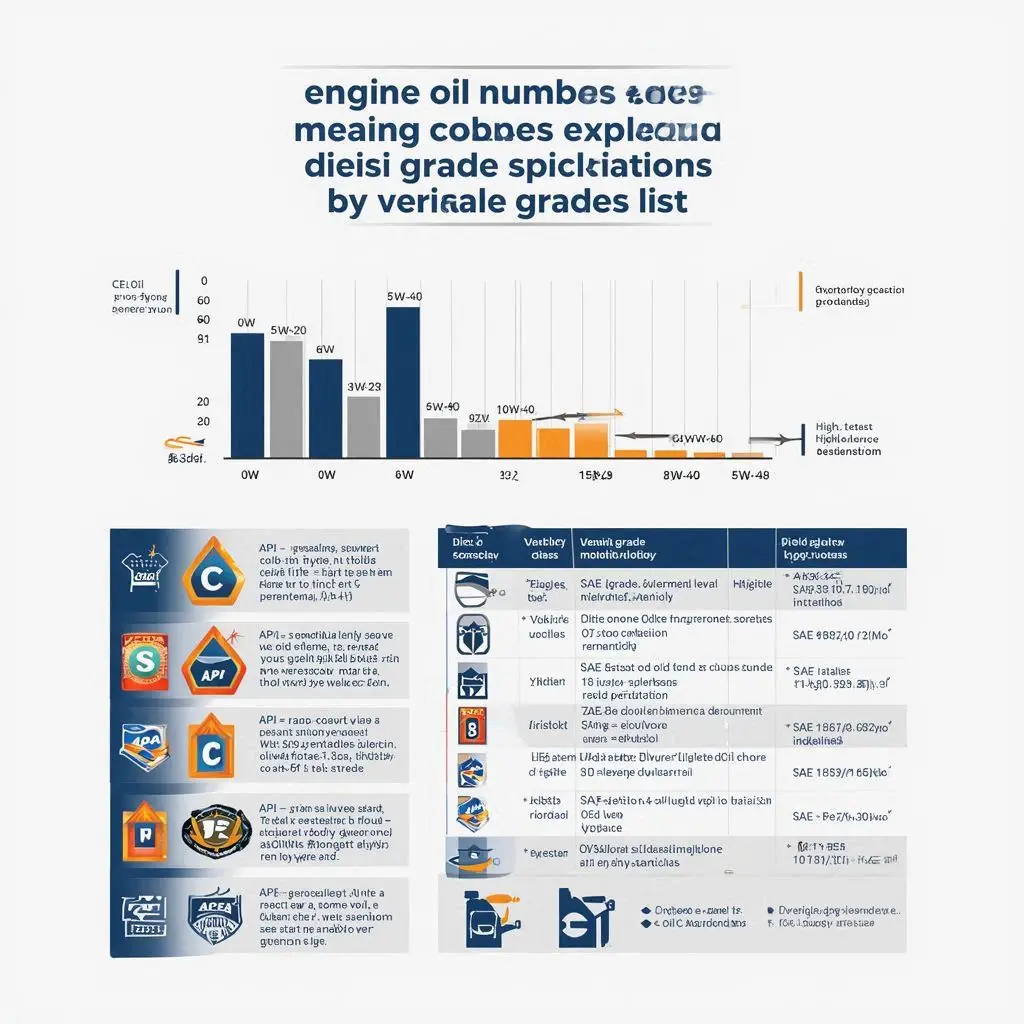
Engine Oil Numbers & Codes Explained: Diesel Grades Guide
Short Intro:
Selecting the right engine oil is crucial for performance and longevity. This guide explains oil numbers, codes, diesel grades, and vehicle-specific specifications.
What You’ll Learn:
- Meaning of engine oil numbers and viscosity grades
- Decoding API, ACEA, and manufacturer-specific codes
- Diesel engine oil grades and their applications
- Vehicle-specific oil specifications for optimum performance
- Complete engine oil grades list with practical guidance
1) Introduction: Engine Oil Numbers Meaning Codes Explained
Engine Oil Numbers Meaning Codes Explained
Engine oil numbers and codes provide essential insights into oil performance, viscosity, and compatibility. Understanding these numbers ensures you select the right lubricant, protecting your engine under varying temperatures and loads. Following manufacturer recommendations is crucial for optimal engine life. This article explores oil numbers, codes, diesel grades, and vehicle-specific oil requirements.
Transitioning from general guidance, we now dive into the meaning behind engine oil numbers.
2) Engine Oil Number Meaning
Engine Oil Number Meaning
SEO Snippet: Engine oil numbers indicate viscosity at low and high temperatures, guiding correct selection for your engine type and climate.
Engine oil numbers, often called viscosity grades, represent the oil's thickness at different temperatures. The first number (e.g., 0W, 5W, 10W) indicates cold-start performance, where a lower number ensures smooth flow in cold climates. The second number (e.g., 20, 30, 40) shows high-temperature viscosity, essential for protection under heat and load.
For example, 5W-30 offers excellent cold-start flow and medium high-temperature protection, while 10W-40 suits warmer climates and heavy-duty use. Selecting the correct oil number depends on climate, engine design, and manufacturer recommendations, ensuring reduced wear and optimal efficiency.
Keywords: oil viscosity, cold-start oil, high-temperature oil, 5W-30, 10W-40, engine lubrication, oil selection guide
External Links:
3) Engine Oil Codes Explained
Engine Oil Codes Explained
SEO Snippet: Engine oil codes, such as API and ACEA, indicate performance, quality, and vehicle compatibility for gasoline and diesel engines.
API (American Petroleum Institute) and ACEA (European Automobile Manufacturers’ Association) codes classify oils by performance standards. API codes: "S" for gasoline engines, "C" for diesel, followed by letters indicating quality levels, e.g., SN, CJ-4. ACEA codes like A3/B4 or E6/E7 specify performance, viscosity, and application criteria for European vehicles.
Manufacturer-specific codes may also apply, ensuring warranty compliance and peak engine performance. Following these codes guarantees resistance to oxidation, wear, deposits, and compliance with emission systems.
Keywords: API oil codes, ACEA oil codes, engine performance, diesel and gasoline, manufacturer oil specs, oil quality
External Links:
Novin Trades Market View and Forecast: Engine oil codes help forecast demand trends for high-performance lubricants in North America and Europe.
4) Diesel Engine Oil Grade
Diesel Engine Oil Grade
SEO Snippet: Diesel engine oils, such as API CJ-4 and CI-4 Plus, protect high-pressure engines, reduce wear, and maintain emission system efficiency.
Diesel engines operate at higher pressures and temperatures, requiring specialized oils. Common API grades:
- CJ-4: Modern engines with DOCs/DPFs, optimized for soot control and wear protection.
- CI-4/CI-4 Plus: Older engines without advanced pollution controls, offering oxidation resistance and soot management.
- CH-4: Older diesel engines, providing high-temperature stability and deposit control.
European ACEA standards (E6/E7) differentiate between low-SAPS oils for after-treatment systems (E6) and conventional high-SAPS oils (E7). Manufacturer recommendations, climate, and operating conditions are critical in selecting the correct diesel oil.
Keywords: diesel oil grades, API CJ-4, CI-4 Plus, CH-4, ACEA E6, E7, diesel engine lubrication
External Links:
5) Oil Specifications by Vehicle
Oil Specifications by Vehicle
SEO Snippet: Vehicle-specific oil specs consider engine type, climate, and manufacturer recommendations to ensure optimal engine performance.
Different vehicles require distinct oil specifications based on engine design, manufacturer recommendations, climate, and operating conditions. Owner’s manuals provide suggested viscosity grades, API or ACEA performance levels, and other requirements. Turbocharged engines may need enhanced oxidation resistance, while diesel engines often require higher viscosity and wear protection.
Climate extremes and operating conditions also affect oil choice; extreme cold may require 0W oils, while hot climates may favor 40 or 50 grades. Aftermarket recommendations can complement manufacturer guidance for enhanced engine protection.
Keywords: vehicle oil specs, manufacturer recommendations, engine type, climate-specific oil, turbocharged engines, diesel lubrication
External Links:
6) Engine Oil Grades List
Engine Oil Grades List
SEO Snippet: Engine oil grades, from 0W-20 to 20W-60, guide proper lubrication and protection for diverse vehicles and operating conditions.
Common engine oil grades include:
- 0W-20: Modern cars, excellent cold-start and fuel economy
- 5W-30: Popular all-rounder for various climates
- 10W-30 / 10W-40: Older or warmer climate vehicles
- 15W-40: Diesel engines, heavy-duty applications
- 20W-50: High-performance, older engines, extreme conditions
- 5W-40 / 0W-40: Contemporary and performance vehicles
- 10W-60 / 20W-60: Racing or high-stress engines
Choosing the correct grade depends on manufacturer guidance, climate, and engine type to ensure optimal performance and longevity.
Keywords: engine oil grades, viscosity chart, high-temperature protection, cold-start oils, diesel lubrication, performance engines
External Links:
7) Conclusion: Engine Oil Numbers Meaning Codes Explained
Engine Oil Numbers Meaning Codes Explained
SEO Snippet: Correct engine oil selection using numbers, codes, and grades ensures peak performance, reduced wear, and extended engine life.
Understanding engine oil numbers, API/ACEA codes, diesel grades, and vehicle-specific specifications is essential for proper lubrication, engine protection, and longevity. Following manufacturer guidance ensures compliance with warranties and emission standards. Using the right oil reduces wear, maintains performance, and protects against extreme conditions.
For more detailed insights and market forecasts, visit NovinTrades and explore our extensive Reportage section.
Keywords: engine oil selection, API codes, diesel grades, vehicle oil specs, oil numbers guide, engine performance
External Links:
About NovinTrades
As part of its mission, NovinTrades offers a dedicated Reportage section where businesses, brands, and professionals can publish in-depth sponsored articles, analyses, and thought-leadership pieces. These reportages are SEO-optimized for maximum visibility and long-term engagement.
📍 Explore more at NovinTrades Reportages
📣 Join us on Telegram: https://t.me/novintrades