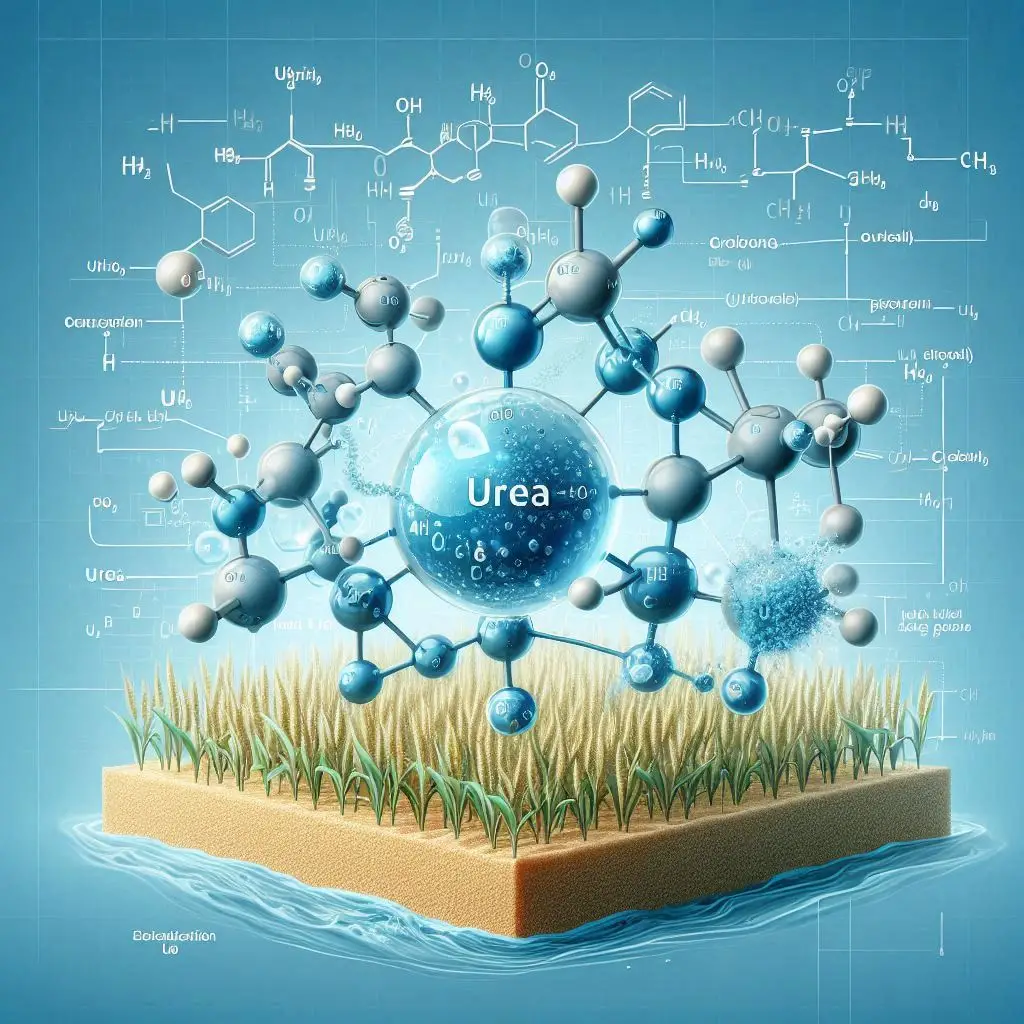
Urea Structure Explained: Effects on Protein & Applications
Short Intro:
Urea is a vital organic compound with wide-ranging applications in biology, agriculture, and industry. Its structure and properties influence protein folding, metabolism, and crop productivity.
What You’ll Learn:
- Detailed explanation of urea’s chemical structure
- How urea affects protein folding and denaturation
- Role of urea in metabolism and kidney function
- Industrial and agricultural applications of urea
- Insights into urea as a diagnostic and research tool
1) Introduction: Urea Structure Explained
Urea Structure Explained
Urea structure explained covers the chemical composition, properties, and biological significance of urea. Chemically represented as (NH₂)₂CO, urea is an organic diamide of carbonic acid. First synthesized in 1828 by Friedrich Wöhler, it marked a milestone in organic chemistry as the first compound produced from inorganic materials.
Urea’s molecular structure consists of two amino (NH₂) groups bonded to a central carbonyl (CO) group. This planar configuration allows urea to interact with water, proteins, and other molecules, making it versatile for industrial, agricultural, and medical applications. Its ability to dissolve in water and act as both an acid and base underpins its diverse uses.
Understanding urea structure and its functions sets the stage for examining its effects on protein folding, metabolic roles, and industrial applications.
LSI Keywords: urea molecular structure, (NH₂)₂CO, urea chemical formula, planar structure urea, Friedrich Wöhler urea
SEO Snippet: Discover urea’s structure, chemical properties, and versatile applications in biology, industry, and agriculture.
2) Urea Molecular Structure
Urea Molecular Structure
The urea molecular structure defines its chemical and physical properties. Urea has a central carbon atom double-bonded to oxygen and single-bonded to two nitrogen atoms, each bonded to hydrogen. This planar geometry enhances hydrogen bonding with water and other molecules.
Properties of Urea
- Solubility: Highly soluble in water, ideal for fertilizers and solutions.
- Melting & Boiling Points: 132.7°C and 337.7°C, supporting industrial processes.
- Amphoteric Nature: Acts as an acid or base depending on pH.
- Metabolic Role: Key in nitrogen excretion in organisms.
These properties allow urea to function as a fertilizer, chemical reagent, and metabolic intermediate.
LSI Keywords: urea solubility, urea planar molecule, nitrogen excretion, chemical properties of urea, urea in metabolism
External Links: PubChem Urea
SEO Snippet: Explore the molecular structure of urea, highlighting its solubility, melting point, and role in metabolism.
3) Urea Structure Definition
Urea Structure Definition
Urea structure definition emphasizes its composition as (NH₂)₂CO. This diamide has a central carbonyl carbon connected to two amino groups, forming a planar molecular structure.
Biological and Industrial Significance
- Metabolism: Urea is the primary nitrogenous waste, produced via the urea cycle from ammonia.
- Agriculture: A key nitrogen source in fertilizers, boosting plant growth and crop yield.
- Industrial Uses: Essential in plastics, resins, adhesives, and cosmetic formulations.
Understanding urea’s structure clarifies its behavior in chemical reactions, biological systems, and industrial applications.
LSI Keywords: urea diamide, carbonyl group urea, urea cycle, nitrogen fertilizer, industrial urea applications
External Links: ScienceDirect: Urea Chemistry
SEO Snippet: Urea’s definition and structure reveal its crucial role in metabolism, agriculture, and industrial applications.
4) How Urea Affects Protein Structure
How Urea Affects Protein Structure
Urea impacts protein folding and stability by disrupting non-covalent interactions, such as hydrogen bonds, hydrophobic interactions, and ionic bonds. At low concentrations, it increases flexibility; at high concentrations, it fully denatures proteins.
Protein Denaturation and Folding
- Mechanism: Urea solvates hydrophobic residues, unfolding protein chains.
- Applications: Used in biochemistry to study folding/unfolding pathways.
- Concentration Dependency: Partial vs. complete denaturation depends on urea levels.
This denaturing property allows researchers to investigate protein stability, folding kinetics, and design therapeutics targeting protein misfolding diseases.
LSI Keywords: protein denaturation, urea protein folding, hydrophobic interactions, protein stability, biochemistry research
External Links: NCBI: Urea and Protein Folding
SEO Snippet: Learn how urea affects protein structure, influencing folding, denaturation, and biochemistry research.
5) What Urea Tells You
What Urea Tells You
Urea serves as an indicator of metabolic health, soil nitrogen content, and industrial efficiency. Its measurement informs kidney function, nitrogen balance, and chemical process monitoring.
Applications:
- Medical Diagnostics: Blood urea nitrogen (BUN) levels assess kidney function and detect metabolic disorders.
- Protein Metabolism: Reflects nitrogen excretion rates and liver activity.
- Agriculture: Guides nitrogen fertilizer application for optimal crop growth.
- Industrial: Monitored in resin, adhesive, and chemical synthesis processes.
Urea’s multifaceted role provides insights across medicine, agriculture, and industrial chemistry, making it an essential compound for research and practical applications.
LSI Keywords: blood urea nitrogen, kidney function biomarker, soil nitrogen, urea industrial monitoring, metabolic health indicator
External Links: Mayo Clinic: Urea Test
SEO Snippet: Urea levels reveal kidney health, protein metabolism, and guide agricultural and industrial applications.
6) Conclusion: Urea Structure Explained
Urea Structure Explained
Urea structure explained highlights its chemical composition, impact on protein folding, metabolic roles, and industrial relevance. Its molecular formula (NH₂)₂CO supports its versatile functions in agriculture, medicine, and chemical synthesis.
Summary:
Urea provides critical insights into nitrogen metabolism, protein behavior, and fertilizer efficiency. Its applications range from medical diagnostics to industrial manufacturing, emphasizing its central role in science and industry. Understanding urea helps optimize agricultural yields, advance protein research, and improve chemical processes.
LSI Keywords: urea applications, nitrogen metabolism, protein denaturation, fertilizer efficiency, industrial urea uses
External Links: Royal Society of Chemistry: Urea
For more insights and detailed analyses, visit the NovinTrades Reportages section.
About NovinTrades
As part of its mission, NovinTrades offers a dedicated Reportage section where businesses, brands, and professionals can publish in-depth sponsored articles, analyses, and thought-leadership pieces. These reportages are SEO-optimized for maximum visibility and long-term engagement.
📍 Explore more at NovinTrades Reportages
📣 Join us on Telegram: https://t.me/novintrades