Where Does Table Salt Come From? Origins & Production 2025
Short Intro
Table salt is a staple in kitchens worldwide, but few know its fascinating journey from ancient oceans and rock deposits to our dinner tables. This article uncovers its origins and production methods.
What You’ll Learn
- Origins of table salt: rock salt vs. saltwater
- Step-by-step manufacturing processes
- Quality control and purification methods
- Historical and cultural significance
- Health and environmental considerations
- Technological innovations in salt production
1) Introduction: Where Does Table Salt Come From?
Where does table salt come from? Table salt is more than a seasoning; it’s a product of geology, chemistry, and human ingenuity. Derived primarily from rock salt and saltwater, its journey spans millions of years from ancient oceans to modern dining tables.
From evaporated prehistoric seas forming vast salt deposits to advanced purification and industrial processes, understanding salt’s origins illuminates its critical role in human history, health, and technology. This article explores its sources, manufacturing procedures, and broader significance.
2) Sources of Table Salt
Sources of Table Salt: Rock Salt and Saltwater Origins
SEO Snippet: Table salt comes from rock salt deposits and natural saltwater bodies, enriched with trace minerals.
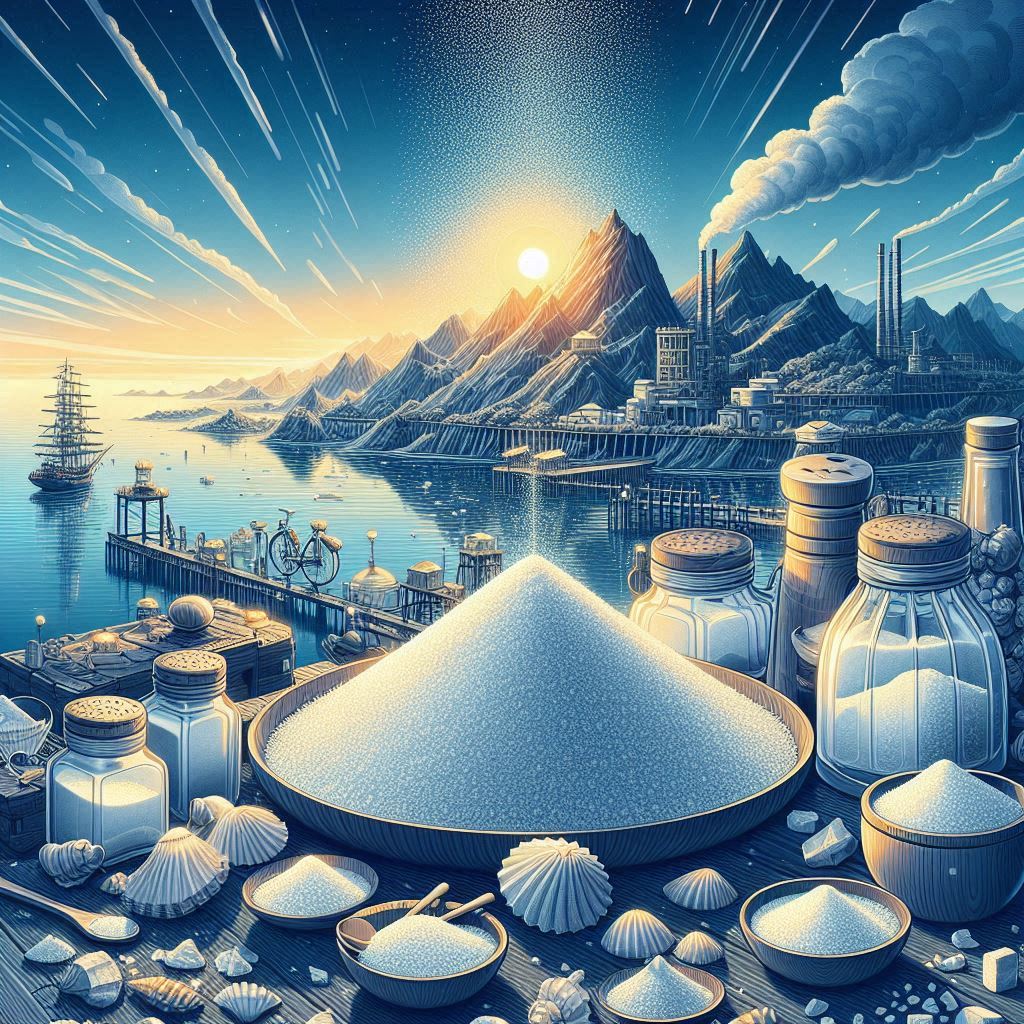
Table salt primarily originates from two sources: rock salt (halite) and saltwater. Rock salt forms when ancient oceans evaporate, leaving behind crystalline deposits buried under layers of earth. These deposits often contain minor minerals like potassium, magnesium, and calcium compounds.
Saltwater sources include oceans, salt lakes, and subterranean brine pools. Seawater is rich in dissolved salts, including magnesium chloride, potassium, and calcium compounds. Regions with high evaporation rates, such as the Dead Sea or coastal solar ponds, are ideal for harvesting salt naturally.
Related Keywords: halite, seawater salt, salt deposits, magnesium chloride, potassium chloride, evaporated seas, brine pools
External Links:
3) Transforming Rock Salt
Transforming Rock Salt: Mining and Processing Methods
SEO Snippet: Rock salt undergoes mining, crushing, and purification to produce the refined salt used for consumption.
Mining rock salt begins with geological surveys and core sampling to locate viable deposits. Extraction uses controlled blasting or undercutting techniques. Once mined, salt is crushed into smaller crystals and purified to remove impurities, ensuring compliance with food-grade standards.
Advanced purification techniques separate unwanted minerals while maintaining essential trace elements. Rigorous quality control ensures the salt meets safety and purity criteria for consumption, industrial, or pharmaceutical uses.
Related Keywords: rock salt mining, halite extraction, salt purification, food-grade salt, trace minerals, salt crushing, quality control
External Links:
- Salt Mining Methods – Britannica
- International Salt Association
Novin Trades Market View and Forecast: Global rock salt production is expected to rise moderately, with increasing demand in food, chemical, and industrial sectors through 2030.
4) Extracting Salt from Saltwater
Extracting Salt from Saltwater: Evaporation and Purification
SEO Snippet: Solar evaporation is the most common method of obtaining salt from seawater, followed by purification and crystallization.
Saltwater extraction relies heavily on solar evaporation, particularly in hot, dry climates. Shallow ponds collect seawater, which gradually evaporates, leaving salt crystals. Impurities are removed through multiple basin transfers, and careful control of evaporation separates soluble minerals.
This process produces sea salt rich in trace elements and minerals. Modern brine evaporation systems often integrate sustainable energy sources to reduce environmental impact.
Related Keywords: solar evaporation salt, sea salt production, brine crystallization, magnesium removal, sustainable salt harvesting, salt purification
External Links:
Novin Trades Market View and Forecast: Increasing consumer preference for sea salt supports expansion of solar evaporation operations globally.
5) Quality Control in Salt Production
Quality Control in Salt Production: Purity and Safety Measures
SEO Snippet: Quality control ensures salt is free from contaminants and meets health and industrial standards.
Salt intended for consumption undergoes stringent quality checks to remove silt, insoluble particles, and chemical impurities. Depending on intended use—food, industrial, or pharmaceutical—different purity levels are required. Continuous monitoring, laboratory testing, and certification ensure compliance with international standards.
Related Keywords: salt purity, food safety, laboratory testing, industrial salt, contaminant removal, quality certification, trace minerals
External Links:
6) Health Implications of Salt
Health Implications: Sodium Intake and Recommendations
SEO Snippet: While essential, excessive salt intake can contribute to hypertension, heart disease, and other health risks.
Sodium, a major component of salt, is vital for fluid balance, nerve signaling, and muscle function. However, excessive intake is linked to hypertension, cardiovascular disease, and stroke. WHO recommends consuming less than 5 grams of salt per day. Individual requirements vary by age, health status, and lifestyle.
Related Keywords: sodium intake, hypertension, cardiovascular risk, dietary guidelines, heart health, WHO salt recommendations
External Links:
7) Environmental Considerations
Environmental Considerations in Salt Production
SEO Snippet: Salt production impacts ecosystems, but sustainable methods can reduce environmental footprint.
Salt mining and evaporation can degrade landscapes, disrupt habitats, and consume significant energy. To mitigate impacts, producers implement water recycling, landscape restoration, and renewable energy use. Sustainable salt production practices are increasingly critical for environmental stewardship.
Related Keywords: sustainable salt production, ecological impact, water recycling, renewable energy, habitat restoration, mining sustainability
External Links:
8) Historical Significance of Salt
Historical Significance: Salt as a Commodity and Cultural Symbol
SEO Snippet: Salt shaped trade, economy, and politics, symbolizing wealth and resistance in human history.
Salt has been a precious commodity for millennia, preserving food and influencing trade routes. Salt taxes sparked political events, including India’s Salt March led by Mahatma Gandhi, symbolizing resistance and independence. Its economic and cultural value demonstrates the deep human reliance on this mineral.
Related Keywords: salt trade, salt tax, preservation, cultural significance, historical commodities, Gandhi Salt March
External Links:
9) Technological Developments
Technological Developments: Enhancing Salt Production
SEO Snippet: Modern innovations improve salt extraction efficiency, quality, and sustainability.
Technological advances, from automated mining equipment to electrolysis of brine, have transformed salt production. Electrolysis yields sodium hydroxide and chlorine as valuable byproducts. Future innovations may include membrane filtration and selective crystallization, enhancing resource efficiency and reducing waste.
Related Keywords: salt technology, brine electrolysis, sodium hydroxide, chlorine production, membrane filtration, selective crystallization, industrial innovation
External Links:
Novin Trades Market View and Forecast: Investment in technological upgrades continues to optimize efficiency, reduce environmental impact, and meet rising global demand.
10) Conclusion: Where Does Table Salt Come From?
Where does table salt come from? From ancient oceans to modern industrial processes, table salt exemplifies human ingenuity, technological advancement, and cultural significance. Understanding its sources, production, and impact underscores its essential role in nutrition, industry, and history.
SEO Snippet: Table salt’s journey from ancient oceans and rock deposits to your table reflects history, technology, and human ingenuity.
Keywords: table salt origins, rock salt, sea salt, salt production, health impact, sustainable mining, technological innovation
External Links:
- Salt Institute
Explore more detailed analyses, market forecasts, and industry insights in our NovinTrades Reportages.
About NovinTrades
As part of its mission, NovinTrades offers a dedicated Reportage section where businesses, brands, and professionals can publish in-depth sponsored articles, analyses, and thought-leadership pieces. These reportages are SEO-optimized for maximum visibility and long-term engagement.
📍 Explore more at NovinTrades Reportages
📣 Join us on Telegram: https://t.me/novintrades
- FAQ Schema:
- Where does table salt come from?
- Is sea salt healthier than rock salt?
- How is salt purified for consumption?