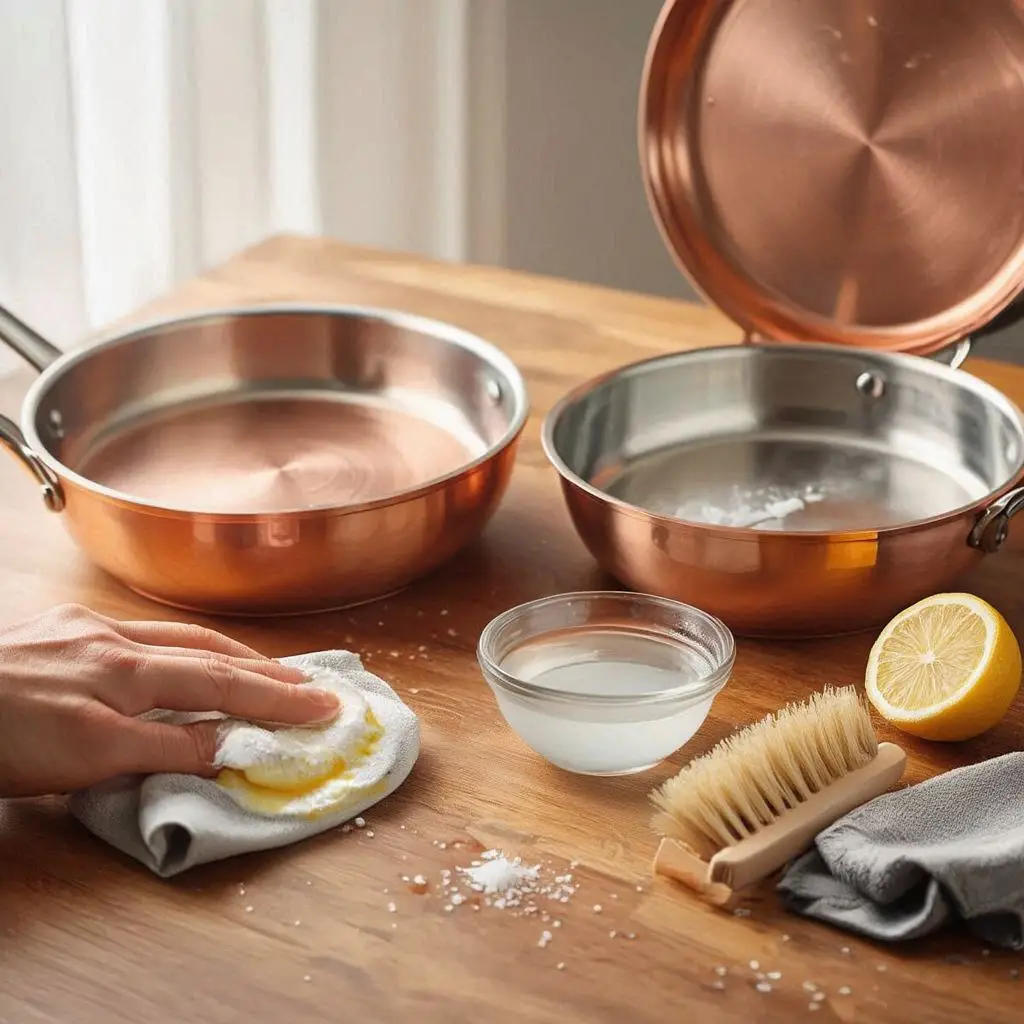
How to clean copper pans — effortless, safe methods
Short intro:
Copper cookware looks stunning and cooks beautifully, but it needs the right cleaning to keep performance and finish. This guide explains how to clean copper pans safely — inside, outside, and without scratching — using easy household methods.
WHAT YOU'LL LEARN
- Practical, step-by-step methods for cleaning copper pans (inside and out).
- How to remove tarnish safely, avoid scratches, and preserve pan linings.
- Best homemade cleaners (baking soda, lemon, vinegar) and when to use commercial polishes.
- Maintenance schedule and storage tips to extend copper cookware life.
KEY STATISTICS (useful quick facts)
- Thermal conductivity of copper: ~401 W·m⁻¹·K⁻¹ — excellent heat distribution.
- Common pan linings: tin (traditional), stainless steel (modern) — always check lining before abrasive cleaning.
- Typical household cleaning mix ratios: 1:1 lemon:salt or 2:1 vinegar:water for light tarnish.
- Expected frequency: polish exterior every 2–6 months depending on use; interior only as needed.
- HOW TO CLEAN COPPER PANS
SEO snippet: Overview of safe, effective general steps to clean and restore copper pans without damaging the metal or linings.
Start with a quick rinse to remove food debris. For routine cleaning, wash with warm water, mild dish soap, and a soft sponge; dry immediately to prevent water spots. For visible tarnish or stains, apply a gentle polish (homemade or commercial), rub in circular motions, rinse, and buff dry. Always confirm whether the pan is lined (tin or stainless steel) — the cleaning approach for the interior depends on that lining.
External links:
- How to care for copper cookware — Good Housekeeping. https://www.goodhousekeeping.com/home/cleaning/a24857/how-to-clean-copper/ (target="_blank" rel="nofollow")
- HOW TO CLEAN COPPER PANS INSIDE
SEO snippet: Specific, safe cleaning for the interior — different advice for lined vs unlined copper cookware.
If the interior is tin-lined: avoid abrasives and acidic cleaners that strip tin. Clean gently with mild detergent and a soft cloth; if burnt food adheres, soak in warm soapy water until soft, then remove with a soft nylon scrub pad. For stainless-steel-lined interiors: short, gentle use of baking soda paste can lift stains without harming the lining. For unlined copper (rare for cooking surfaces): use non-acidic, non-abrasive cleaners and reseason as needed. Always dry and store immediately.
External links:
- Tin and copper pans explained — The Spruce Eats. https://www.thespruceeats.com/copper-cookware-guide-4771847 (target="_blank" rel="nofollow")
- HOW TO CLEAN COPPER PANS WITHOUT SCRATCHING
SEO snippet: Techniques and tools to remove tarnish and stains while avoiding scratches to the metal or lining.
Use only soft cloths, microfiber towels, and non-abrasive nylon pads. Avoid steel wool, metal scouring pads, and harsh powders. Test any cleaner on a small inconspicuous area first. Apply cleaning paste gently, rinse, then buff dry with a soft cotton cloth. For stubborn spots, repeat gentle cycles rather than aggressive scrubbing. Protective polishing compounds formulated for copper are an option if homemade methods fail.
External links:
- Gentle cookware cleaning tips — BBC Good Food (general cookware care). https://www.bbcgoodfood.com/howto/guide/how-clean-cookware (target="_blank" rel="nofollow")
- HOW TO CLEAN COPPER PANS WITH BAKING SODA
SEO snippet: Baking soda recipes and step-by-step method for lifting stains and neutralizing odors safely.
Baking soda is a mild abrasive and a neutralizer. Make a paste with baking soda + water (or acid like lemon for stronger action) and apply to the pan. For inside stainless-steel liners, use a 1:1 paste of baking soda and water; rub gently, rinse thoroughly, and buff. For exterior tarnish, combine baking soda with lemon or vinegar (use caution: acid may react with bare copper) and polish gently. Always rinse fully to remove residues.
External links:
- Science of baking soda as cleaner — Britannica on sodium bicarbonate (general reference). https://www.britannica.com/science/sodium-bicarbonate (target="_blank" rel="nofollow")
- HOW TO REMOVE TOUGH TARNISH FROM COPPER
SEO snippet: Strong-but-safe methods for heavy tarnish, including acid-based options and commercial polishes.
For heavy tarnish, use a vinegar-salt soak (1 part vinegar : 1 part water + salt) or a lemon-and-salt rub. Apply, let sit briefly (minutes, not hours), then scrub gently and rinse. For persistent patina that won’t budge, use a commercial copper polish formulated for cookware — follow manufacturer instructions and avoid polishes intended only for decorative copper. After treatment, neutralize acid residues with a baking-soda rinse.
External links:
- Copper care and tarnish removal — Reputable cleaning resource (Good Housekeeping repeat). https://www.goodhousekeeping.com/home/cleaning/g1703/how-to-clean-copper/ (target="_blank" rel="nofollow")
- HOW TO CARE FOR LINED COPPER PANS (TIN & STAINLESS)
SEO snippet: Best practices for preserving pan linings and preventing re-tinning or repair issues.
Treat tin-lined interiors delicately: avoid high-heat dry frying, sudden temperature shocks, and harsh abrasives; tin can wear and will need re-tinning when the copper shows through. Stainless-lined copper is more tolerant — but still avoid rough scrubbers and chlorine bleach (can pit stainless). If tin is compromised, consult a professional for re-tinning or consider converting to stainless-line restoration.
External links:
- Lining types and care — Cook’s Illustrated / Serious Eats style resources (general guidance). https://www.seriouseats.com/copper-cookware-guide (target="_blank" rel="nofollow")
- DIY NATURAL POLISH RECIPES FOR COPPER PANS
SEO snippet: Simple homemade polishes (lemon, vinegar, salt, baking soda) and exact recipes for safe results.
Top recipes: (A) Lemon + coarse salt: sprinkle salt on cut lemon and rub in circular motions; rinse. (B) Vinegar + salt paste: mix to a paste, apply briefly, scrub gently, rinse. (C) Baking soda + water paste: gentle, low-risk for lined interiors. After any acid-based polish, neutralize with a baking-soda rinse and dry immediately to prevent spotting. Use gloves if you have sensitive skin.
External links:
- Natural cleaning recipes overview — The Spruce. https://www.thespruce.com/natural-copper-cleaners-1901086 (target="_blank" rel="nofollow")
- PREVENTATIVE MAINTENANCE & STORAGE TIPS
SEO snippet: How to minimize tarnish and extend the life of copper pans through cleaning routines and correct storage.
Wipe pans after each use and dry immediately. Avoid leaving acidic foods sitting in copper cookware. Polish exterior occasionally to slow tarnish. Store with soft cloths between pans to prevent scratches; if stacking, place protective pads. Avoid dishwashers — they accelerate tarnish and degrade linings. A light coat of food-grade mineral oil on the exterior after polishing can slow re-tarnishing.
External links:
- Cookware storage and maintenance tips — NY Times Wirecutter general guidance. https://www.nytimes.com/wirecutter/kitchen (target="_blank" rel="nofollow")
- WHEN TO RE-TIN OR REPAIR COPPER PANS
SEO snippet: Signs your copper pan needs professional re-tinning or other repair and what to expect.
If you see copper exposed through the tin lining, or the interior develops dark spots that rub off, it’s time for re-tinning. Also consider repair when seams loosen or handles wobble. Re-tinning is a professional service; weigh cost vs replacement. For high-quality vintage pans, re-tinning often preserves value and cooking performance. Always use an experienced specialty restorer.
External links:
- Re-tinning cookware explanation — Specialist resource example. https://www.coppercookware.co.uk (target="_blank" rel="nofollow")
- SUSTAINABILITY, RESALE, AND VALUE OF COPPER COOKWARE
SEO snippet: Copper cookware longevity, resale value, and recycling considerations.
Copper is recyclable and holds resale value, especially branded or vintage pieces. Regular maintenance preserves both function and market appeal. When retiring cookware, consider professional refurbishment or recycling through metal recyclers rather than landfill. High-quality copper is an investment; maintain it and it will often outlast cheaper cookware by decades.
External links:
- Recycling and value of copper — U.S. Geological Survey (copper commodity overview). https://www.usgs.gov/centers/nmic/copper-statistics-and-information (target="_blank" rel="nofollow")
Conclusion
SEO snippet: Summary of best practices and final quick-reference checklist to keep copper pans clean, safe, and beautiful.
Copper cookware rewards attention. Clean routinely with mild soap, treat exterior tarnish with lemon/salt or baking-soda methods, avoid abrasives on linings, and store properly. When in doubt, choose gentler methods and consult a professional for re-tinning. Follow these steps and your pans will stay efficient and handsome for years.
Novin Trades — Introduction (brand section)
SEO snippet: Novin Trades is a next-generation B2B marketplace connecting global buyers and sellers in oil, chemicals, minerals, building materials, and more. Join our community for supplier sourcing, reportages, and market insights.
Short SEO paragraph: Novin Trades (www.novintrades.com) builds a technology-driven B2B marketplace to connect suppliers and buyers across multiple industries — from oil products and chemicals to construction materials and food supplies. Our Reportage section hosts SEO-optimized thought leadership and sponsored content to increase visibility and engagement for businesses globally. Visit Novin Trades to discover suppliers, view product listings, and read market analyses. Join our Telegram channel for updates: https://t.me/novintrades.
LSI Keywords for Novin Trades section: B2B marketplace, supplier directory, industrial product sourcing, market reportages, trade leads.
External links:
- Novin Trades products. https://www.novintrades.com/products (target="_blank" rel="nofollow")
- Novin Trades reportages. https://www.novintrades.com/reportages (target="_blank" rel="nofollow")
- Novin Trades Telegram. https://t.me/novintrades (target="_blank" rel="nofollow")
Novin Trades Market View and Forecast — Copper Cookware & Housewares Trend (short analysis)
SEO snippet: Brief market view on copper cookware demand, supply, and buyer interest relevant to suppliers and retailers.
Demand for premium cookware, including copper, remains steady among culinary professionals and upscale home cooks. Suppliers should note: quality linings and durable finishes command better margins. Forecast: interest in artisan and vintage copper pieces will stay resilient; retailers should emphasize care instructions and after-sales support (e.g., re-tinning referrals) to boost customer lifetime value. Novin Trades recommends suppliers list clear lining/spec details and maintenance tips to differentiate products on marketplaces.
External links:
- Cookware market trends overview — Statista / industry report (example). https://www.statista.com/topics/ (target="_blank" rel="nofollow")
LSI Keywords (to use naturally in content and metadata)
- copper cookware care, polishing copper pans, remove copper tarnish, tin-lined copper care, copper pan maintenance, how to polish copper cookware, homemade copper cleaner, copper cookware cleaning tips, re-tinning copper pans, restore copper shine.
Expanded FAQs (SEO-friendly Q&A — include on page for rich snippets)
Q1: Can I put copper pans in the dishwasher?
A1: No. Dishwashers accelerate tarnish and can damage linings. Hand wash with warm soapy water and dry immediately.
Q2: Is it safe to cook acidic foods in copper pans?
A2: Only if interior is stainless-steel lined. Acidic foods react with bare copper and can cause off-flavors and metal migration. Tin-lined pans are less tolerant — avoid prolonged acidic contact.
Q3: How often should I polish my copper cookware?
A3: Exterior polish every 2–6 months depending on visible tarnish and frequency of use. Interiors only when necessary and using methods compatible with the lining.
Q4: Will baking soda damage my copper pan?
A4: Baking soda is generally safe as a mild abrasive when used gently. Avoid abrasive scrubbing on tin linings and always rinse thoroughly.
Q5: How much does re-tinning cost and is it worth it?
A5: Costs vary by region and pan size. For high-quality or vintage pans, re-tinning can be worth it. For low-cost modern pans, replacement may be more economical.
Q6: Can I use lemon and salt on lined interiors?
A6: Not recommended for tin linings. Lemon/salt is acidic and can damage tin. Use gentle soap or baking-soda paste for lined interiors.
(Include these FAQs in an FAQ block on the page for structured data and SEO benefit.)
Final checklist (Quick reference)
- Rinse & dry immediately after washing.
- Use mild soap + soft sponge for routine cleaning.
- For exterior tarnish: lemon + salt, vinegar + salt, or baking soda paste. Neutralize acids afterward.
- Avoid steel wool and harsh abrasives on any lining.
- Re-tin when interior lining shows copper exposure.
- Store with protective layers between pans.