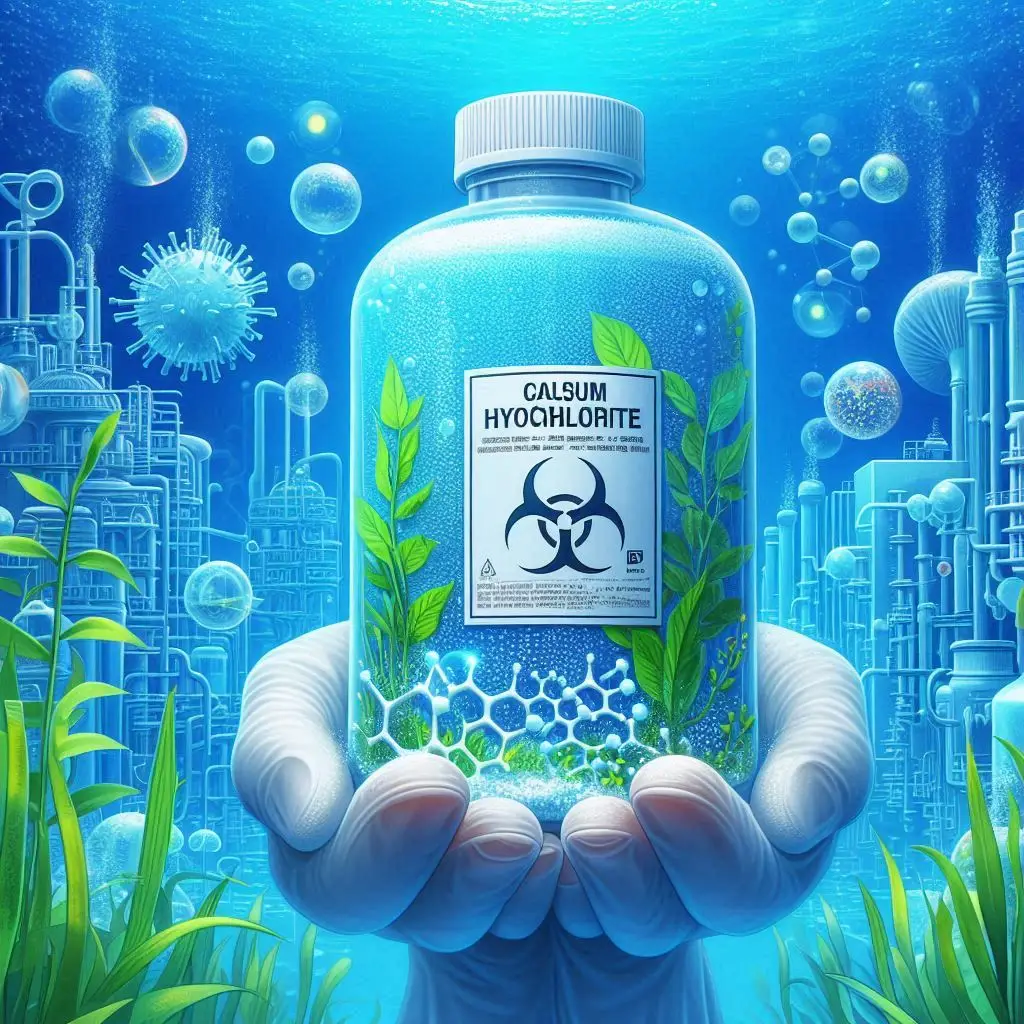
Calcium Hypochlorite in Textile Bleaching & Processing
Short Intro
Calcium hypochlorite plays a critical role in textile bleaching and fabric preparation.
This article explains its safety profile, solubility behavior, and industrial production.
What You’ll Learn
- How calcium hypochlorite is used in textile bleaching and pretreatment
- Key MSDS safety considerations for textile operations
- Solubility behavior and its impact on fabric processing
- Overview of the calcium hypochlorite production process
- Market relevance and sourcing considerations for textile buyers
Calcium Hypochlorite in Textile Processing
Calcium Hypochlorite in Textile Processing
SEO snippet: Calcium hypochlorite is widely used in textile bleaching to remove natural pigments, improve fabric whiteness, and prepare fibers for dyeing.
Calcium hypochlorite is a strong oxidizing agent extensively applied in textile wet processing, particularly during bleaching and fabric preparation stages. Its primary function is to remove natural coloration, waxes, and organic impurities from cotton and other cellulosic fibers. This step is essential for achieving uniform dye uptake and consistent fabric quality.
In textile mills, calcium hypochlorite is typically used during early-stage processing before dyeing or finishing. Compared to milder bleaching agents, it offers rapid action and cost efficiency, making it attractive in regions with high-volume cotton processing. However, its aggressive oxidation requires controlled application to prevent fiber damage and residual chlorine issues.
From a market perspective, calcium hypochlorite remains relevant in textile-producing economies where traditional bleaching systems are still widely deployed. NovinTrades observes stable demand from textile manufacturers seeking reliable bleaching chemicals with predictable performance.
LSI keywords: textile bleaching chemicals, cotton pretreatment, fabric whitening, oxidizing agents, textile wet processing
External link:
https://www.britannica.com/science/bleaching-chemical-process (nofollow, opens new tab)
Calcium Hypochlorite MSDS for Textile Applications
Calcium Hypochlorite MSDS for Textile Applications
SEO snippet: Understanding calcium hypochlorite MSDS is essential for safe handling in textile bleaching, storage, and industrial fabric processing environments.
Material Safety Data Sheet compliance is critical when calcium hypochlorite is used in textile facilities. The compound is classified as a strong oxidizer and can release chlorine gas when exposed to moisture or acids. Textile plants must implement strict storage, ventilation, and handling protocols to minimize operational risks.
Health hazards include respiratory irritation from chlorine fumes, skin burns from direct contact, and eye damage if splashed. Textile workers handling bleaching agents must use appropriate PPE, including chemical-resistant gloves, goggles, and protective clothing. Emergency response procedures should be clearly defined within textile plants.
From a regulatory standpoint, adherence to MSDS guidelines protects both personnel and production continuity. NovinTrades market assessments show that buyers increasingly prioritize suppliers offering consistent documentation and safety compliance alongside competitive pricing.
LSI keywords: calcium hypochlorite MSDS, textile chemical safety, bleaching agent hazards, PPE in textile plants
External link:
https://www.cdc.gov/niosh (nofollow, opens new tab)
Solubility of Calcium Hypochlorite in Textile Bleaching
Solubility of Calcium Hypochlorite in Textile Bleaching
SEO snippet: Calcium hypochlorite solubility affects bleaching efficiency, chlorine release rate, and fabric integrity in textile processing.
Calcium hypochlorite is moderately soluble in water and undergoes hydrolysis to form hypochlorous acid, the active bleaching and disinfecting species. In textile applications, controlled solubility ensures effective oxidation without excessive fiber degradation.
Temperature, agitation, and concentration all influence dissolution behavior. Higher temperatures and proper mixing improve solubility, allowing more uniform bleaching across fabric batches. However, over-concentration can lead to uneven treatment or weakened fibers, especially in cotton textiles.
Textile engineers must balance solubility with processing time and fabric sensitivity. According to NovinTrades’ industry view, mills optimizing bleaching parameters can reduce chemical waste while maintaining fabric quality, an increasingly important factor as sustainability pressures grow.
LSI keywords: calcium hypochlorite solubility, textile bleaching efficiency, hypochlorous acid, fabric pretreatment
External link:
https://www.sciencedirect.com/topics/chemical-engineering/hypochlorite (nofollow, opens new tab)
Calcium Hypochlorite Production Process
Calcium Hypochlorite Production Process
SEO snippet: The calcium hypochlorite production process involves chlorination of calcium hydroxide to create a powerful industrial bleaching compound.
Industrial production of calcium hypochlorite begins with calcium hydroxide and chlorine gas. Chlorination reactions are carefully controlled to produce calcium hypochlorite alongside calcium chloride as a byproduct. Filtration and drying stages follow to obtain solid granules or powder suitable for industrial use.
For textile markets, product consistency and chlorine content are critical quality parameters. Granular forms are preferred for controlled dosing in bleaching systems. Packaging must prevent moisture ingress to preserve chemical stability during storage and transport.
NovinTrades monitors supply trends across key producing regions, noting that stable chlorine availability and energy costs significantly influence calcium hypochlorite pricing for textile buyers.
LSI keywords: calcium hypochlorite manufacturing, industrial chlorination, textile chemical supply, bleaching compound production
Market View and Textile Industry Outlook
Market View and Textile Industry Outlook
SEO snippet: Calcium hypochlorite demand in textiles remains stable, supported by cotton processing and cost-effective bleaching requirements.
Despite the gradual adoption of alternative bleaching agents, calcium hypochlorite continues to hold a place in global textile processing. Its affordability and effectiveness sustain demand, particularly in emerging textile hubs.
NovinTrades forecasts steady consumption driven by cotton-based textile production, while regulatory pressure encourages better handling practices rather than outright replacement. Buyers increasingly focus on consistent quality, compliance, and logistics reliability when sourcing bleaching chemicals.
LSI keywords: textile chemical market, bleaching agents demand, calcium hypochlorite pricing, textile industry outlook
Conclusion: Calcium Hypochlorite in Textile Bleaching
Conclusion: Calcium Hypochlorite in Textile Bleaching
SEO snippet: Calcium hypochlorite remains a key textile bleaching chemical, combining effective oxidation with well-established industrial handling practices.
Calcium hypochlorite plays a defined and ongoing role in textile bleaching and fabric preparation. When applied responsibly, it delivers efficient whitening, reliable impurity removal, and economic advantages for textile manufacturers. Understanding its MSDS, solubility behavior, and production process allows textile professionals to optimize usage while managing safety and quality standards.
Readers are encouraged to explore more chemical market insights and textile-related analyses in the NovinTrades articles and Reportage section.
LSI keywords: textile bleaching chemicals, calcium hypochlorite uses, fabric processing agents
External link:
https://www.novintrades.com (internal reference)
About NovinTrades
As part of its mission, NovinTrades offers a dedicated Reportage section where businesses, brands, and professionals can publish in-depth sponsored articles, analyses, and thought-leadership pieces. These reportages are SEO-optimized for maximum visibility and long-term engagement.
📍 Explore more at NovinTrades Reportages
📣 Join us on Telegram: https://t.me/novintrades
Reportage Section
As part of this mission, NovinTrades also offers a dedicated Reportage section, where businesses, brands, and industry professionals can publish in-depth sponsored articles, analyses, and thought-leadership pieces. This section is designed to boost online visibility, strengthen brand authority, and drive meaningful engagement with target audiences. Reportages are optimized for SEO and strategically placed on our platform, ensuring long-term exposure to decision-makers and potential buyers across industries.
Visit: https://www.novintrades.com/reportages
Join our Telegram: https://t.me/novintrades